Attitudes Towards External Information
In Part 2 of our four-part series summarising the results of the 2014 Survey of Use of Data in Barbadian Organisations we investigate the attitudes towards information on the external environment.
In our first of four articles summarising the results of our Use of Data in Barbadian Organisations Survey, we discuss the Relationship Between Data Practices and Financial Performance. We have been taught that our products and services should be designed to meet consumer demands, and that our analysis of our environment should consider all of the external factors impacting our business. But we often fall short of this ideal.
The Relationship Between Data Practices and Financial Performance Read More »
This article is a first attempt at understanding the size and spending potential of the three main consumer markets in Barbados – the mass market, the mass affluent and the wealthy. Historically, companies seem to have defined their market somewhat intuitively. While approaching segmentation this way has some advantages, the main disadvantage is that it limits the ability to plan ahead. Without an understanding of how target markets are changing, companies will find themselves planning with the inherent assumption that the future will be similar to the present.
A Preliminary Look at the Mass Market, Mass Affluent and Wealthy in Barbados Read More »
The next population census for Barbados is due in two years in 2020. By this time, the oldest Millennials will be 40 years old, comfortably in the middle of adulthood. This article considers how young adulthood has changed between the 2000 and 2010 Population census in Barbados, focusing on differences in timing and degree. The main finding is that Young Adults in 2010 were delaying starting a family and getting married, possibly due to longer stints of formal education and higher probabilities of unemployment.
The Social, Economic and Demographic Characteristics of Barbadian Young Adults Read More »

The mortgage market has proven to be one of the more resilient consumer financial markets in Barbados, growing at elevated rates long after the economic downturn began. But from 2013, growth has been subdued. This article investigates key indicators that may explain the resilience of the mortgage market and shed some light on what will be required to spark a revival in mortgage growth.
The Barbados Mortgage Market After Nine Years of Economic Strain Read More »
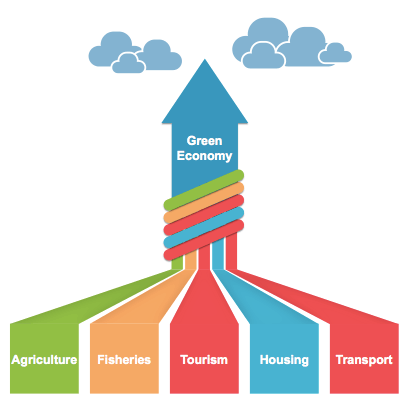
The Barbados Green Economy Scoping Study provides an assessment of the potential of greening various industries in Barbados (tourism, agriculture, fisheries, housing and transport) as well as outlines a roadmap for promoting the spread of this idea throughout other areas of the economy and society. Through a stakeholder consultation process, the study outlines opportunities for greening each of the above areas within the context of the key cross-cutting issues of water, land, energy and waste.
While the effects of climate change are likely to be significant for businesses located in small states like those in the Caribbean, climate change also presents tremendous business opportunities. In this article, Dr. Winston Moore explores the risks and opportunities that climate change poses for businesses operating in the Caribbean.
The Impact of Climate Change on Caribbean Business Read More »
In Barbados, there appears to be a general consensus that small businesses are vital contributors to economic growth in Barbados. There also appears to be widespread agreement that access to financing is a challenge in Barbados. This article explores the range of financing options available in Barbados and raises the possibility that the financing challenge may reflect mismatches between financiers and borrowers, and not the lack of financing.
Small Business Financing in Barbados Are there really insufficient options? Read More »
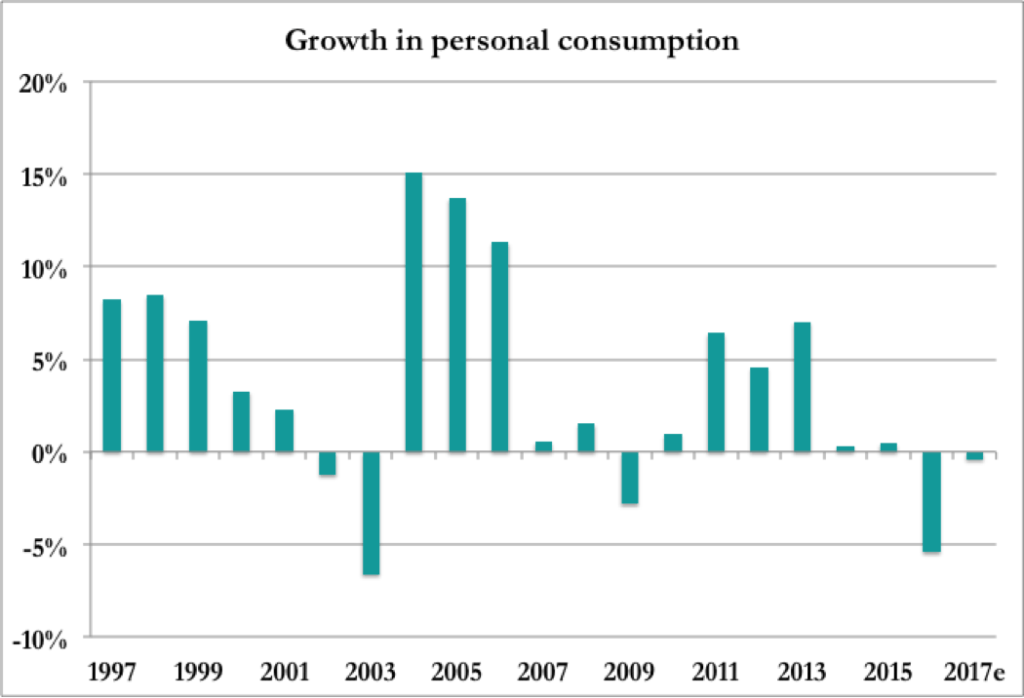
The Barbados economy appears to be emerging from a prolonged economic slump, fueled mostly by personal consumption. In large measure, funding challenges appear to explain the contraction in consumer spending experienced throughout the downturn, and the shift from purchasing non-essential items (such as vehicles) to purchasing essential items (such as food) over the last 7 years. The year 2015, however, may turn out to be a pivotal year, as all sources of funding appear to be on the rise. This is positive news for consumer goods and retail businesses, as 2015 could mark the return of at least moderate growth in consumer spending.
The Barbadian financial market has not always behaved as theory would suggest, especially when considering most investment products. One theory explaining the disconnect between investment theory and observed market trends in Barbados could be that insufficient information results in suboptimal wealth allocation. Our research uncovered four information gaps that influence potential investors’ demand for investment products.